How I Survived Job Loss Without Financial Panic: Real Risk Management Moves
Losing my job hit harder than I expected—not just emotionally, but financially. I felt the ground shake beneath my savings, and fear set in fast. But instead of collapsing, I leaned into risk management strategies I’d once ignored. This isn’t a get-rich-quick story; it’s about staying afloat when income vanishes. I’ll walk you through the exact steps I took to protect what I had, reduce exposure, and rebuild stability—no jargon, just real moves that worked when it mattered most. The experience taught me that financial resilience isn’t built in moments of crisis, but in the quiet decisions made long before trouble arrives. What follows is a practical guide rooted in real-life stress, tested under pressure, and designed to help anyone navigate one of life’s most unsettling events with clarity and control.
The Moment Everything Changed: Facing Unemployment Head-On
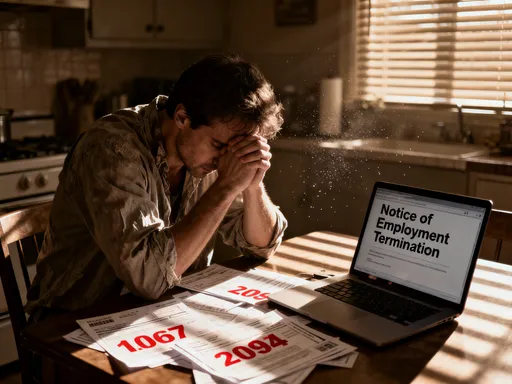
The call came on a Tuesday afternoon. The tone was polite, the wording corporate, but the message was absolute: my position was being eliminated. There was no warning, no performance issue—just restructuring. In that moment, everything shifted. The steady paycheck I had counted on, the benefits that covered my family’s health needs, the routine that gave structure to my days—all gone in under five minutes. Emotionally, I was numb at first, then overwhelmed. But financially, the implications sank in even faster. How would I cover the mortgage? What about the car payment? Could we keep up with groceries, utilities, and the kids’ activities without my income?
What surprised me most wasn’t the job loss itself—anyone in today’s economy knows it’s a possibility—but how unprepared I felt despite years of steady work. I had savings, yes, but they were not structured for survival. I hadn’t mapped out my financial exposure, nor had I built alternative income streams. Like many, I assumed job security was a given as long as I worked hard. That illusion shattered quickly. The real wake-up call wasn’t the layoff; it was realizing how fragile my financial foundation truly was. But in that vulnerability, I found a strange kind of clarity. Panic wouldn’t pay the bills. Action would.
Instead of retreating into fear, I decided to treat the situation like a financial emergency requiring immediate triage. I gathered all my account statements, listed every expense, and projected how long my savings would last under different scenarios. This wasn’t about optimism or denial—it was about facts. I accepted that income had stopped, but financial responsibility hadn’t. From that point forward, I shifted from reactive mode to strategic management. I began to see unemployment not as a personal failure, but as a financial risk event—something that could be analyzed, mitigated, and managed with discipline. That mindset change was the first step toward regaining control.
Why Emergency Funds Are Just the Beginning
Most financial advice says to save three to six months’ worth of expenses. I had done that. I felt safe. But when the job disappeared, I quickly learned that an emergency fund, while essential, is only the starting point—not the full solution. Cash reserves are like a life raft: they keep you from drowning, but they don’t get you to shore. The real challenge begins the moment you realize your savings are finite and your timeline for finding new income is uncertain. I watched my balance shrink faster than expected, not because of reckless spending, but because of gaps I hadn’t anticipated.
For example, my severance package was delayed by nearly a month due to administrative processing. My health insurance didn’t immediately roll into COBRA, leaving a two-week window with no coverage. Unemployment benefits took three weeks to approve, and the first payment was less than half my previous income. These delays created cash flow gaps that my emergency fund had to cover—even though I had planned for the ‘big’ expenses. What I hadn’t planned for was the timing mismatch between when money was due and when it would come in. This is where many people get caught off guard. They assume liquidity means having money in the bank, but true liquidity also means access when you need it.
I responded by restructuring my savings into tiers. I kept one month’s expenses in a high-yield savings account for immediate access. Another two months were placed in a money market fund, slightly less liquid but earning a modest return. The remainder was held in short-term certificates of deposit with staggered maturity dates, ensuring that every 30 to 60 days, a portion would become available without penalty. This ladder approach gave me predictable access to funds and reduced the temptation to dip too deeply too soon. I also reviewed automatic transfers and paused any non-essential savings contributions, redirecting that cash toward active financial defense.
The lesson here is clear: an emergency fund must be more than a number. It must be a system—structured for accessibility, protected from premature depletion, and aligned with real-world timing. Without that structure, even a well-funded account can vanish before you’re ready.
Mapping Your Financial Exposure: A Practical Risk Audit
Once the initial shock faded, I knew I needed a clear picture of my financial vulnerabilities. I created what I now call a personal risk audit—a simple but thorough assessment of every financial obligation and potential shortfall. This wasn’t about complex spreadsheets or financial models. It was about answering three basic questions: What do I owe? When is it due? And what happens if I can’t pay? I listed every recurring expense, from mortgage and utilities to subscriptions and insurance premiums. Then I categorized them into three groups: fixed, flexible, and optional.
Fixed expenses were non-negotiable—things like housing, property taxes, and minimum debt payments. These had to be covered no matter what. Flexible expenses included groceries, transportation, and some utilities, where I could adjust usage or find lower-cost alternatives. Optional expenses were things like streaming services, dining out, and non-essential shopping—items I could pause without major disruption. This categorization helped me see where I had control and where I didn’t.
Next, I assessed my contractual obligations. I reviewed every lease, loan agreement, and service contract to understand penalties for early termination or missed payments. I discovered that my internet plan had a two-year commitment with a steep cancellation fee, but also that I qualified for a hardship program offering temporary relief. I reached out to my providers and asked about flexible payment options. To my surprise, many were willing to work with me once I explained my situation honestly.
I also evaluated my income replacement options. Could I collect unemployment? Was I eligible for any government assistance programs? Did I have skills I could monetize immediately? I mapped out potential income sources, even small ones, and assigned them probabilities and timelines. This allowed me to build a realistic cash flow projection for the next six months. The audit didn’t eliminate risk, but it transformed uncertainty into actionable insight. Instead of fearing the unknown, I could now plan for it.
Cutting Costs Without Crushing Your Lifestyle
Reducing expenses during unemployment doesn’t have to mean living in austerity. My goal wasn’t to punish myself, but to preserve dignity while protecting my finances. I approached cost-cutting as a series of strategic adjustments, not sacrifices. The first step was renegotiating fixed bills. I called my internet provider and asked for a lower rate, mentioning competitor offers. After a brief hold, they reduced my monthly bill by 25%. I did the same with my mobile phone plan, switching to a family discount program that cut my cost in half.
I reviewed all subscriptions and canceled those I didn’t actively use. I paused my gym membership, knowing I could restart it later. I switched to a cheaper grocery store for staples and planned meals around sales and discounts. I didn’t eliminate small pleasures—like coffee or books—but I bought them selectively, often using library services or secondhand stores. These changes weren’t drastic, but they added up. Within a month, I had reduced my monthly outflow by nearly 30%, freeing up hundreds of dollars without feeling deprived.
One of the most effective moves was adjusting my insurance plans. I contacted my health insurer and switched to a high-deductible plan with lower premiums, knowing I wasn’t expecting major medical costs in the short term. I reviewed my auto insurance and removed collision coverage on an older vehicle, accepting a bit more risk in exchange for lower monthly payments. I also deferred non-essential maintenance, like cosmetic repairs, while keeping up with safety-related services.
The key was timing. I didn’t make all these changes at once. I spaced them out, so the impact on daily life was gradual. I also communicated openly with my family, explaining why we were making adjustments and involving them in the process. This turned cost-cutting from a source of stress into a shared mission. We weren’t losing things—we were protecting our future.
Income Diversification: Building Side Streams Before Crisis Hits
Looking back, the most powerful lesson I learned was that risk management starts long before a crisis. The idea of having multiple income sources felt abstract when I had a stable job. But once I lost that job, I realized how dangerous it is to rely on a single paycheck. I began exploring side income opportunities, and while I started late, I still managed to generate small but meaningful earnings. I offered freelance writing services using skills from my previous role. I created digital templates and guides related to my field and sold them online. I even tutored part-time via video calls, helping others learn skills I already had.
These efforts didn’t replace my full-time income, but they provided a buffer. More importantly, they restored a sense of agency. Every dollar earned reminded me that I wasn’t powerless. I learned that side income doesn’t have to be time-consuming or glamorous. Even a few hours a week can make a difference if the work leverages existing skills. The real value wasn’t just financial—it was psychological. Knowing I had another way to earn, even a small one, reduced anxiety and kept me motivated.
For those still employed, the time to build side streams is now. Start small. Use weekends or evenings to develop a skill, create a product, or offer a service. Platforms exist for almost every talent—writing, design, teaching, consulting. The goal isn’t to quit your job, but to reduce dependence on it. Think of it as financial insurance. Just as you wouldn’t drive without car insurance, you shouldn’t rely on a single income source without backup. A side stream doesn’t need to be large to be valuable. Even $200 a month can cover a critical bill when your main income stops.
What matters most is consistency and preparation. The people who survive job loss with the least stress aren’t those with the biggest savings, but those who have already diversified their income. They’ve built options before they needed them. That’s the essence of proactive risk management.
Protecting Credit and Debt Health During Downtime
One of the biggest dangers during unemployment is damage to your credit. It’s easy to fall into the trap of missing payments, maxing out credit cards, or taking on high-interest loans to cover gaps. I saw friends do it—using credit as a lifeline, only to drown in debt later. I was determined not to follow that path. I knew that preserving my credit score wasn’t just about pride—it was about future opportunities. A strong credit history means better loan terms, lower insurance rates, and more financial flexibility when I needed it most.
My strategy was simple: communicate early and act responsibly. I contacted every creditor—mortgage lender, credit card companies, student loan servicer—and explained my situation. I asked about hardship programs, forbearance options, and temporary payment reductions. Most were willing to work with me. My mortgage company allowed me to skip two payments without penalty. My credit card issuer reduced my interest rate and offered a six-month deferment. These weren’t handouts—they were structured relief options designed to prevent default.
I also avoided using credit for everyday expenses. I treated my credit cards like emergency tools, not income replacements. I set a strict rule: no new charges unless absolutely necessary and within a small, defined limit. I paid the minimum on all accounts to keep them in good standing, even when it meant delaying other non-essential spending. I also paused any applications for new credit, knowing that inquiries could lower my score during a vulnerable time.
Debt didn’t disappear, but I managed it with intention. I prioritized high-interest debt and avoided new obligations. I didn’t take out personal loans or use payday lenders, knowing the long-term cost would outweigh short-term relief. By protecting my credit, I ensured that when I found new work, I wouldn’t be burdened by avoidable financial damage. That discipline paid off—within a year, my credit score was not only restored but improved.
Rebuilding with Resilience: Turning Risk Awareness into Strength
Losing my job was painful, but it became one of the most transformative experiences of my financial life. It forced me to confront my assumptions, restructure my habits, and build real resilience. Today, I’m back at work, but I’m not the same person I was before. I no longer measure financial security by my job title or salary. Instead, I measure it by my preparedness—by the systems I’ve put in place to manage risk before it manages me.
I maintain a tiered emergency fund, regularly update my risk audit, and continue to diversify my income. I review my expenses quarterly, not because I’m struggling, but because I’ve learned that vigilance is part of stability. I teach my family about financial awareness, not through lectures, but through shared decisions and open conversations. We treat money as a tool for freedom, not just survival.
The truth is, job loss isn’t rare. It’s a normal part of modern economic life. What’s rare is the preparation to handle it with calm and control. True financial security doesn’t come from avoiding risk—it comes from understanding it, planning for it, and acting with purpose when it arrives. I didn’t survive my job loss because I was lucky. I survived because I managed risk like it mattered—because it did. And if I can do it, so can you. The storm will come for everyone, eventually. The question isn’t whether you’ll face it, but whether you’ll be ready when it does.