Slow Walks & Hidden Treasures: My Soulful Shopping Journey in Siem Reap
You know that feeling when shopping isn’t about buying, but about discovering? In Siem Reap, I traded rush for rhythm, swapping malls for maze-like markets and quiet alley boutiques. This isn’t just retail—it’s a sensory journey through silk, spice, and story. Slowing down revealed the soul behind every handmade scarf and carved trinket. If you’ve ever wanted to feel a place through its crafts, this is your sign. What began as a simple search for souvenirs transformed into a pilgrimage of presence, where each interaction, texture, and scent became part of a deeper understanding of Cambodia’s living culture. In a world that glorifies speed, Siem Reap taught me that the most meaningful discoveries happen when we allow ourselves to wander without urgency.
The Art of Slow Travel in Siem Reap
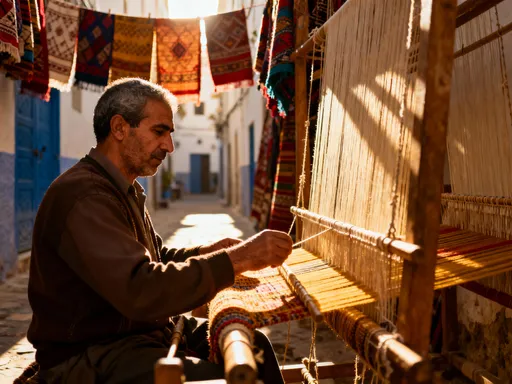
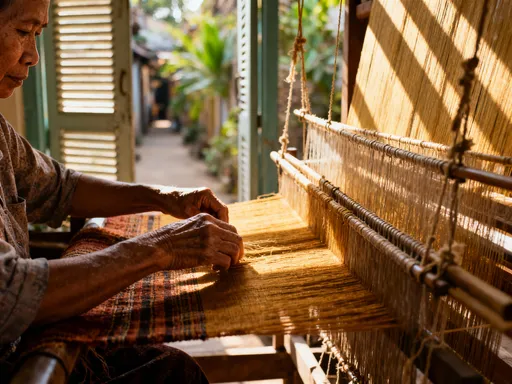
Slow travel is more than a trend; it’s a quiet rebellion against the checklist mentality that dominates modern tourism. In Siem Reap, where the shadow of Angkor Wat looms large over itineraries, many visitors rush from sunrise at the temples to sunset at Phnom Bakheng, ticking off sights with little pause in between. But beyond the grandeur of ancient stones lies a quieter, more intimate rhythm—one found in the pace of daily life, in the unhurried stir of morning market stalls, and in the soft clack of wooden looms weaving silk under shaded awnings. Choosing to slow down in Siem Reap is not about rejecting the iconic; it’s about balancing awe with authenticity.
When travelers step off the temple circuit, even briefly, they open themselves to moments that cannot be scheduled: a grandmother offering a taste of ripe mango from her fruit stand, a tailor measuring fabric with careful fingers while sharing stories of his apprenticeship, or a monk pausing to smile at a child sketching temple spires in chalk on the sidewalk. These unplanned encounters are not distractions—they are the heartbeat of the city. By releasing the pressure to see everything, visitors create space for connection, allowing time to linger over a cup of strong, sweet kafei sok at a corner stall or to sit on a low wooden bench watching artisans at work.
This shift in pace fosters mindfulness, a quality often lost in fast-paced tourism. Mindful travel means being present—truly seeing, hearing, and feeling the place you’re in. In Siem Reap, this presence reveals layers of resilience and creativity that postcards cannot capture. It means noticing how a woman folds banana leaves around sticky rice with practiced ease, or how a craftsman carves lotus motifs into sandstone with tools passed down through generations. These details are not tourist performances; they are daily acts of cultural preservation. By embracing slow travel, visitors become witnesses to living heritage, not just spectators of ancient ruins.
Moreover, slowing down supports a more sustainable form of tourism. When travelers spend time in neighborhoods beyond the main tourist zones—like Wat Bo or Sala Kamreuk—they distribute economic benefits more evenly across the community. Local families who run small shops, guesthouses, or home-based workshops gain visibility and income. This kind of tourism fosters dignity, not dependency. It respects the tempo of local life rather than imposing an outsider’s urgency. In Siem Reap, where history is still being written in the hands of artisans and farmers, slow travel becomes an act of honor—not just for the visitor, but for the host.
Beyond Angkor: Why Shopping Here Tells a Story
For most, Siem Reap is synonymous with Angkor Wat—a marvel of stone, symmetry, and spiritual devotion. Yet the city’s soul extends far beyond its temples. Its markets, workshops, and alleyway studios are repositories of another kind of heritage: one shaped by survival, adaptation, and quiet courage. Every handwoven scarf, every painted bowl, every carved amulet carries within it a narrative of continuity—of traditions preserved through decades of upheaval and renewal. Shopping in Siem Reap, when done with awareness, becomes a way of listening to those stories and supporting the people who live them.
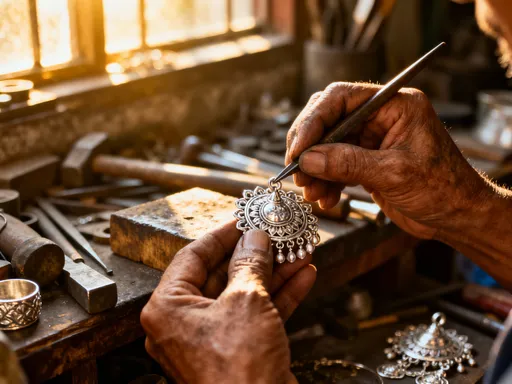
Khmer craftsmanship has long been a vessel for cultural memory. After years of conflict and displacement, many artisans turned to traditional skills not only as livelihoods but as acts of healing. Organizations like Artisans Angkor and Sister Srey have played pivotal roles in reviving endangered crafts such as ikat silk weaving, silver repoussé, and lacquerware. These social enterprises provide training, fair wages, and stable employment, particularly for women and rural families. According to data from the Ministry of Tourism, community-based tourism initiatives in Siem Reap have grown by over 40% in the past decade, reflecting a rising global interest in ethical travel and authentic experiences.
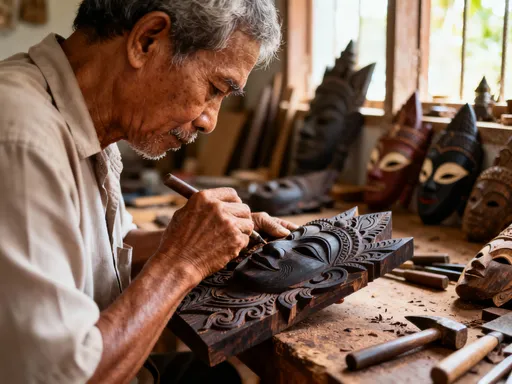
When visitors purchase a piece of hand-dyed silk or a wooden mask carved using ancestral techniques, they are not simply acquiring a souvenir—they are contributing to a cycle of empowerment. Each sale helps fund education for artisans’ children, supports healthcare access, and enables skill transmission to younger generations. A report by the Cambodia Handicraft Association found that households engaged in craft production experience up to 30% higher income stability compared to those relying solely on agriculture or seasonal tourism work. This economic resilience is especially vital in a region where tourism fluctuations can deeply impact livelihoods.
Furthermore, these crafts embody deeper cultural values. The intricate patterns on a Cambodian textile often reflect Buddhist symbolism, nature, or historical motifs. A traditional sbai scarf might feature lotus blossoms, representing purity and enlightenment, or neak (serpent) designs, symbolizing protection. Even the colors carry meaning: deep indigo for wisdom, saffron for devotion, crimson for vitality. By learning these meanings—through conversation with makers or guided visits to studios—travelers move beyond consumption into appreciation. They begin to see each object not as a commodity, but as a conversation between past and present.
Phsar Chas: Stepping Into the Heartbeat of the City
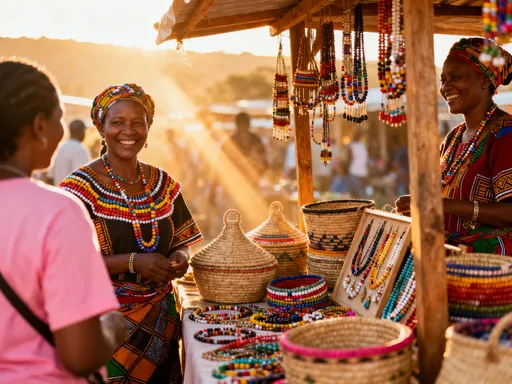
No visit to Siem Reap is complete without stepping into Phsar Chas, the Old Market, where the city’s pulse beats strongest. Unlike the polished boutiques of Pub Street or the curated stalls of the Night Market, Phsar Chas offers an unfiltered slice of everyday life. The air is thick with the scent of dried fish, ripe papaya, and smoky incense. Bolts of cotton and silk drape over wooden counters, while baskets overflow with turmeric root, lemongrass, and dried chilies. Vendors call out in Khmer, their voices rising and falling like a familiar melody, as shoppers weave through narrow lanes lined with goods both practical and beautiful.
This is not a market designed for tourists, though they are welcome. Here, locals buy their groceries, repair shoes, and pick up household items—all within the same bustling space where visitors browse silver jewelry, carved soapstone, and hand-stitched bags. The authenticity is palpable. A woman in a cotton sampot haggles gently over the price of eggplants. A tailor adjusts the hem of a child’s school uniform. A monk selects soap and toothpaste with quiet efficiency. These moments unfold without performance; they are simply life in motion.
For the mindful traveler, Phsar Chas is a classroom of culture. It teaches the rhythm of Cambodian commerce—where bargaining is expected but conducted with warmth, where eye contact and a smile matter as much as the final price. A scarf priced at $10 might settle at $7 after a few polite exchanges, but the transaction is less about savings than about connection. The vendor may offer a piece of advice—“This silk is cooler in the heat,” or “My daughter made these bracelets”—turning a simple sale into a shared moment.
Navigating the market respectfully enhances the experience for everyone. A few basic courtesies go a long way: asking permission before photographing people, using simple Khmer phrases like “Soksabay te?” (Are you well?), and handling goods with care. It’s also wise to carry small bills, as change can be scarce, and to keep belongings secure in crowded areas. But beyond logistics, the real key is presence—taking time to look, listen, and engage. When you do, Phsar Chas reveals itself not as a shopping destination, but as a living tapestry of community, resilience, and daily grace.
Hidden Courtyards & Artisan Studios Off the Beaten Path
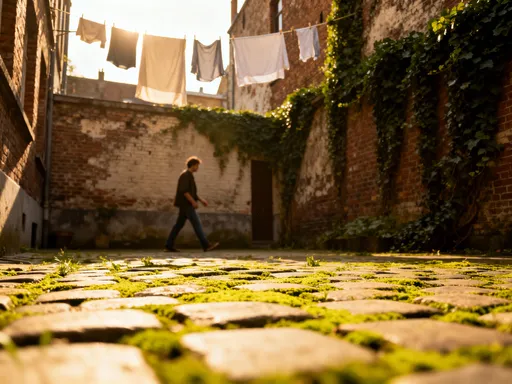
A few blocks from the bustle of Pub Street and the riverfront, tucked behind weathered colonial shophouses and behind ivy-covered walls, lie Siem Reap’s quietest treasures: family-run workshops where time moves differently. These are not storefronts designed for foot traffic, but spaces of devotion—where artisans spend hours, sometimes days, perfecting a single piece. In these hidden courtyards, travelers encounter the true meaning of craftsmanship: patience, precision, and pride.
One such studio, nestled near Wat Preah Prohm, specializes in natural dyeing using jackfruit peel, turmeric, and ebony bark. The owner, a soft-spoken woman named Sreyneath, learned the technique from her grandmother and now teaches it to young apprentices. Watching her stir a cauldron of simmering dye, she explains how each color reflects a season: golden yellow for harvest, deep brown for the rainy earth, soft green for new growth. The process takes days—soaking, mordanting, drying, re-dyeing—and the result is silk that feels alive, its hues shifting subtly in different light.
Nearby, a ceramicist works in a sunlit courtyard, shaping clay into bowls and vases using methods passed down from the Khmer Empire. His hands move with quiet confidence, coaxing form from formlessness. He uses a kick-wheel, not electricity, and fires his pieces in a wood-burning kiln, where temperature and smoke create unpredictable, beautiful effects. Each item bears the mark of its making—imperfections that speak of humanity, not mass production. Visitors are invited to try their hand, to feel the cool slip of clay and the resistance of the spinning wheel. It’s a humbling experience, one that fosters deep respect for the artisan’s skill.
Other spaces focus on social impact. A fair-trade cooperative on the city’s eastern edge employs women from nearby villages, many of whom are single mothers or survivors of human trafficking. Here, they weave scarves, embroider table linens, and create jewelry using recycled materials. The workshop provides not just income but community—daily meals, childcare, and literacy classes. A purchase here—whether a beaded necklace or a hand-printed notebook—supports more than artistry; it supports dignity and recovery. These studios don’t advertise loudly. They rely on word of mouth, guided tours, and the quiet footsteps of travelers who seek meaning over merchandise.
The Rhythm of Bargaining: Culture, Not Commerce
In many Western cultures, fixed prices are the norm, and haggling can feel uncomfortable or even rude. In Siem Reap, however, bargaining is not a battle—it’s a dance, a ritual of interaction that builds rapport between buyer and seller. It’s expected in markets like Phsar Chas and along the side streets where vendors display their wares, but it’s conducted with grace, humor, and mutual respect. Understanding this rhythm transforms what could be a transaction into a moment of connection.
The key is to approach bargaining as conversation, not conquest. A smile, a greeting, and a willingness to engage go further than aggressive negotiation. Most vendors appreciate a polite “Just looking, thank you” as much as a serious buyer. When ready to discuss price, phrases like “Is this your best price?” or “Can you do lower?” are common and accepted, especially when delivered with warmth. The goal is not to win, but to reach a fair agreement—one that honors the value of the item and the labor behind it.
It’s also important to recognize when bargaining is inappropriate. In social enterprises, cooperatives, or galleries that clearly display fixed prices, haggling can undermine the mission of fair wages and sustainability. These spaces often provide detailed information about the maker, the materials, and the production process—inviting appreciation, not negotiation. Respecting this distinction shows cultural awareness and support for ethical commerce.
For travelers, mastering the rhythm of bargaining means learning to read the situation. In a crowded market, a 20–30% reduction from the initial quote is typical and fair. In quieter, more specialized shops, discounts may be smaller or nonexistent. The experience should feel light, even joyful—a shared moment of laughter when prices are countered, or a nod of understanding when agreement is reached. At its best, bargaining in Siem Reap is not about money; it’s about humanity. It reminds us that behind every object is a person with a story, a skill, and a life shaped by both struggle and beauty.
From Market to Memory: Curating a Meaningful Collection
In an age of fast fashion and disposable souvenirs, the act of curation becomes radical. Choosing what to bring home from Siem Reap is not just about space in the suitcase—it’s about intention. Rather than filling bags with trinkets that will gather dust, mindful travelers ask themselves: Who made this? What does it represent? Will I use it, cherish it, remember it? These questions transform shopping from impulse to meaning.
A hand-stamped journal made from recycled paper, its cover pressed with lotus motifs, becomes more than a notebook—it becomes a companion for future reflections. A reusable cotton bag dyed with natural pigments isn’t just practical; it’s a daily reminder of Cambodia’s earthy colors and sustainable traditions. Even a simple wooden spoon, carved by a local artisan, can become a treasured kitchen tool, its grain telling the story of slow, careful making.
Curating a meaningful collection also means valuing quality over quantity. One exquisite silk scarf, woven with traditional patterns and purchased directly from the weaver, carries more significance than five mass-produced versions. It becomes a wearable heirloom, a piece that ages with grace and tells a story when worn. Similarly, a small ceramic bowl from a family studio can grace a dining table for years, its unique glaze catching the light like morning on the Mekong.
This approach to souvenirs enriches daily life back home. Objects become anchors of memory, sparking conversation and connection. They invite stories: “This was made by a woman named Sreyneath, who taught me about natural dyes,” or “I watched this bowl being shaped by hand, right in her courtyard.” In this way, the journey continues long after the flight has landed. The collection is not about possession, but about preservation—of culture, of connection, of the quiet moments that changed how we see the world.
How to Shop Slowly—And Why It Changes Everything
Shopping in Siem Reap, when approached with mindfulness, becomes more than a pastime—it becomes a practice of presence. It teaches us to slow down, to look closely, to listen. It reveals that every object has a lineage, every vendor a life, every interaction a potential for connection. What begins as a search for souvenirs evolves into a deeper understanding of place, people, and purpose.
This shift in perspective changes how we travel. We move from being consumers to being curious guests, from ticking boxes to building bridges. We learn that the most valuable things cannot be rushed: not a handwoven scarf, not a shared laugh with a vendor, not the quiet pride in an artisan’s eyes as they show their work. These are the treasures that stay with us—not in suitcases, but in hearts.
Moreover, slow shopping supports a more sustainable, equitable form of tourism. It redirects economic benefits to local families, preserves endangered crafts, and fosters cultural exchange rooted in respect. It reminds us that travel is not just about where we go, but how we move through the world—gently, thoughtfully, with gratitude.
As you plan your next journey, consider this: What if you traveled not to collect places, but to connect with them? What if you shopped not for things, but for stories? In Siem Reap, the path is already there—through sunlit courtyards, bustling markets, and the quiet hands of those who make beauty from tradition. All it asks is that you slow down, look closely, and let the rhythm of the city guide you. The treasures you find may not fit in a bag, but they will stay with you forever.