You Won’t Believe What I Found at Yellowstone’s Hidden Lookouts
Yellowstone isn’t just about geyers and crowds—you know what’s wild? The *real* magic hides in places most visitors miss. I hit the park at dawn, chasing silence and views that stop your breath. What I discovered wasn’t on any map: quiet cliffs, secret overlooks, and one sunrise that made me tear up—no joke. This is more than sightseeing; it’s about finding moments that feel completely yours. Let me show you the Yellowstone only a few ever really see.
The Myth of the Crowded Park
Most people picture Yellowstone as a postcard come to life—crowds jostling at Old Faithful, tour buses idling near steaming pools, and packed boardwalks at every turn. And yes, in peak season, those scenes are real. But what if the overcrowded image isn’t the whole story? What if the key to a transformed experience isn’t changing the park—but changing when and how you meet it? I learned this during my third visit, when I arrived at the Upper Geyser Basin at 5:30 a.m. The air was still, the boardwalks empty, and the only sound was the soft hiss of hot springs breathing in the morning chill. For the first time, I wasn’t just seeing Old Faithful—I was feeling it.
That morning shifted my mindset. Instead of rushing from one major attraction to the next, I began to see the park as a landscape of possibilities rather than a checklist. The difference wasn’t in the destination—it was in the intention. When you stop trying to see everything and start trying to feel something, the park reveals different layers. You notice the way sunlight hits a wet boardwalk, creating rainbows in the mist. You hear the distant call of a raven echoing through a canyon. You realize that solitude isn’t rare—it’s simply timed. By adjusting your rhythm to the park’s natural pulse, you trade the frenzy of the crowd for the quiet depth of presence.
Take the same Old Faithful viewing area at 11 a.m. versus 6 a.m. One is loud, hot, and hurried. The other is still, cool, and reverent. The geyser erupts the same way, but the experience couldn’t be more different. And just beyond the main boardwalk, a short loop trail circles Biscuit Basin—a quieter, equally stunning collection of sinter formations and bubbling springs. Few people go there, not because it’s hidden, but because they’re too focused on the clock. Letting go of the schedule, even briefly, opens space for serendipity. That’s where the real journey begins—not at the landmark, but in the moment you stop treating it like one.
Why Viewpoints Matter More Than Attractions
In a world of curated travel photos and viral destinations, we’ve been trained to chase the “must-see” list. But in a place like Yellowstone, the most powerful moments often come not from ticking off attractions, but from standing still at a quiet overlook, letting the landscape speak. A true viewpoint does more than show you a scene—it gives you a way to feel it. It’s where the scale of nature recalibrates your sense of self, where the rush of daily life dissolves into the rhythm of wind, water, and earth.
What makes a great viewpoint? It’s not just about elevation or panoramic vistas, though those help. It’s about atmosphere. It’s the quality of light at dawn, the way mist clings to a canyon wall, the sudden silence when the wind drops. At its best, a viewpoint becomes a threshold—a place where you cross from observer to participant. I remember one morning at a pullout along the Lamar Valley road, where I stopped not for any marked attraction, but because the light was golden and the air smelled of wet sage. I saw no geysers, no waterfalls—just rolling hills, a distant herd of bison, and the soft rustle of grass in the breeze. Yet that moment stayed with me longer than any grander spectacle.
The sensory details are what anchor these experiences. The crisp bite of mountain air as you step out of the car. The faint sulfur scent of geothermal activity carried on the wind. The way the sun warms your face after a chilly hike. These aren’t just background elements—they’re part of the story. When you engage more than just your eyes, the landscape becomes immersive. A waterfall isn’t just a photo op; it’s the roar in your chest, the cool spray on your skin, the way the rainbow shifts as you move. That’s the difference between visiting and experiencing. And it’s why, for many, the quiet overlooks become the heart of their Yellowstone memory.
Choosing to prioritize viewpoints over checklists also changes how you move through the park. Instead of rushing, you linger. Instead of framing the perfect shot, you breathe. You begin to notice subtle shifts—the way shadows lengthen across a valley, how birds appear at certain times of day, when the light turns the canyon walls from rust to gold. These are the quiet rhythms of the wild, and they’re only available to those who slow down. In a place shaped by fire, water, and time, the best way to honor its power is not to conquer it with a list, but to meet it with presence.
Sunrise from Dunraven Pass: A Game-Changer
If there’s one place that redefined my idea of Yellowstone beauty, it’s Dunraven Pass. Nestled along the Grand Loop Road between Canyon Village and Tower-Roosevelt, this high-elevation overlook sits at nearly 7,800 feet and offers one of the most expansive views in the park. Yet most visitors drive straight past, heading to the more famous attractions below. I arrived before 6 a.m. on a late summer morning, the sky still dark, stars fading above the Absaroka Range. The air was sharp, the parking area empty, and the only sound was the crunch of my boots on the gravel as I walked to the edge.
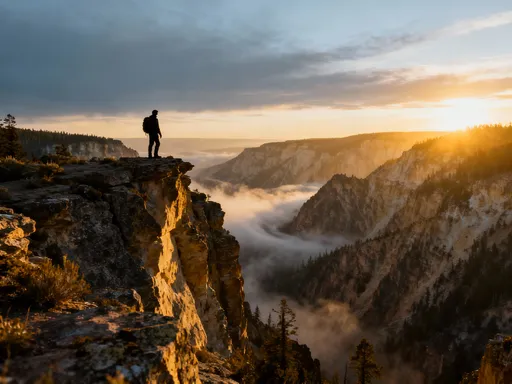
Then the light began. First, a soft glow along the eastern horizon. Then, streaks of pink and orange bleeding into the clouds. Below, the Yellowstone Canyon lay shrouded in mist, like a river of smoke winding through the rock. As the sun crested the ridge, the light spilled into the canyon, illuminating layers of volcanic rock in hues of amber, rust, and deep red. It was as if the earth itself was waking up. I stood there, wrapped in a fleece, camera in hand but mostly just watching, feeling that rare sense of awe that comes from witnessing something vast and ancient and completely untouched by human hands.
What makes Dunraven Pass so powerful isn’t just the view—it’s the stillness. Unlike the crowded basins and geysers, this spot sees few early visitors. There’s no boardwalk, no ranger station, just a stone wall and a sweeping vista. You’re not told where to stand or what to look at. You’re free to absorb it in your own way. I met a woman there who had come alone from Ohio, sitting on a rock with a thermos of tea. “I’ve been coming for twenty years,” she said. “This is the only place that makes me feel small in a good way.” That’s the emotional impact of a true overlook—humility, peace, connection.
For anyone considering this experience, here’s what you need to know. The pullout is easily accessible by car, with room for about six vehicles. No hike is required, though a short path leads to a slightly higher vantage point. Arrive at least 30 minutes before sunrise, dress in layers, and bring a flashlight for the walk from your car. A thermos of coffee or tea makes the wait more comfortable. While the pass is open year-round, late spring through early fall offers the clearest views and safest road conditions. Cell service is spotty, so download your map in advance. And remember—this isn’t a race. Let the light come slowly. Let the silence settle. This is one of those rare places where time feels generous, not scarce.
The South Rim of the Grand Canyon of the Yellowstone
Most visitors to Yellowstone see the Grand Canyon of the Yellowstone in snapshots—quick stops at Artist Point or Inspiration Point, cameras clicking, then back to the car. And while those views are undeniably stunning, they often miss the deeper rhythm of the place. The South Rim, stretching from Uncle Tom’s Point to Lake Butte Overlook, offers far more than photo opportunities. It’s a landscape that changes by the hour, shaped by light, weather, and the constant motion of water and mist.
I spent an entire morning walking the South Rim Trail, starting at Canyon Junction and moving east. By the time I reached Lookout Point, the sun had shifted, transforming the Lower Falls from a gray cascade to a shimmering veil of white and gold. The roar of the falls grew louder with each step, vibrating in my chest. At one overlook, I watched as a gust of wind caught the mist and flung it sideways, creating a fleeting rainbow that arced over the canyon. Moments like these don’t happen on a tight schedule. They require patience, stillness, and a willingness to stay longer than expected.
What surprised me most was how the colors changed. In the early light, the canyon walls appeared almost purple, their iron-rich layers glowing softly. By midday, under direct sun, they turned a deep rust, striated with bands of yellow and brown. Late afternoon brought long shadows that emphasized the texture of the rock—every crack, every ledge, every ancient flow of lava now frozen in time. This is a place shaped by 600,000 years of volcanic activity, erosion, and water, and it deserves more than a glance.
Many visitors rush from one viewpoint to the next, but the real reward comes from slowing down. Sit on a bench. Listen. Watch how the light dances on the water. Notice the way the spray cools the air, carrying the scent of wet stone. Bring a notebook or sketchpad—some of the most memorable moments come not from photos, but from the act of observing deeply. The South Rim isn’t just a destination; it’s an invitation to witness the ongoing story of the earth. And the longer you stay, the more of it you hear.
Finding Solitude at Lewis Lake Overlook
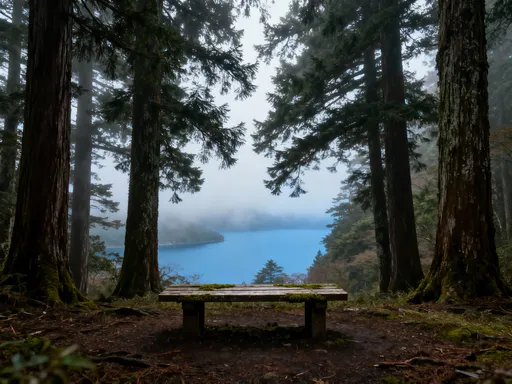
Just south of Yellowstone’s South Entrance, where the park begins to open into wide meadows and quiet forests, lies Lewis Lake—a long, narrow body of water fed by the Snake River and framed by evergreens and distant peaks. Most visitors drive straight through on their way to the geyser basins, but those who pause at the Lewis Lake Overlook are rewarded with one of the park’s most peaceful panoramas. I arrived at sunrise on a misty September morning, the lake still, its surface like glass. Across the water, the Tetons rose in the distance, their peaks dusted with early snow.
What made the moment unforgettable was the wildlife. As I stood quietly by the railing, a moose emerged from the reeds on the far shore, its antlers silhouetted against the light. It waded into the shallows, head down, feeding on aquatic plants. Above, a pair of bald eagles circled, their calls echoing across the water. No one else was around. No chatter, no camera shutters—just the soft lap of waves and the occasional splash. It was a reminder that Yellowstone’s magic isn’t confined to its famous landmarks. Some of its most profound moments happen in the quiet corners, where nature unfolds without an audience.
What’s remarkable about Lewis Lake Overlook is its accessibility. It’s just off the main road, with a paved path and clear signage. Yet it remains relatively uncrowded, especially in the early morning or late afternoon. The view stretches south, offering a rare glimpse of the Teton Range from within Yellowstone. On clear days, the reflection of the mountains in the lake is so sharp it’s hard to tell where water ends and sky begins. For families or older visitors, the area is easy to navigate. For photographers, it’s a dream—soft light, rich textures, and ever-changing skies.
To make the most of it, consider combining the overlook with a short lakeside walk. The trail along the north shore is flat and well-maintained, winding through pine forest and opening onto quiet coves. You might spot otters playing, osprey diving, or elk grazing in the meadows. Pack a light breakfast—there’s a picnic area nearby—and let yourself linger. This isn’t a place to rush through. It’s a place to breathe, to listen, to remember why you came to Yellowstone in the first place. In a park full of spectacle, sometimes the quietest moments are the loudest.
Pro Tips for Discovering Your Own Hidden Spots
While I’ve shared a few of my favorite overlooked places, the real joy of Yellowstone lies in discovering your own. The park covers over 2.2 million acres—larger than Rhode Island and Delaware combined—and no single guidebook can capture all its quiet corners. The key is knowing how to look. Start with the official park map, available at every entrance station and online. Focus not just on the red dots marking major attractions, but on the thin gray lines of secondary roads and the dotted paths of lesser trails. These often lead to pullouts, viewpoints, and trailheads that see far less traffic.
Next, talk to the rangers. At visitor centers from Mammoth to Grant Village, rangers offer up-to-date advice on wildlife sightings, road conditions, and hidden gems. Many have favorite spots they’re happy to share—places where they’ve seen bears fishing at dawn or elk bugling in the fall. Their recommendations are grounded in experience and respect for the park’s rules, making them invaluable guides. Don’t be shy—ask what they love most about their corner of Yellowstone.
Timing is another powerful tool. Dawn and dusk are not just the best times for wildlife viewing—they’re also when the light is most beautiful and the crowds thinnest. Arriving at a popular site early can give you a private experience in a public place. Conversely, visiting in the middle of the day might mean missing the quieter magic of morning mist or evening shadows. Plan your days with flexibility. Leave room for unplanned detours. If you see a side road with a view, pull over. If a trailhead looks inviting, take ten minutes to explore. Some of my best memories began with a simple “Let’s see where this goes.”
Technology can help, too. Download offline maps through apps like Gaia GPS or AllTrails, so you’re not relying on spotty cell service. Use photo apps that track golden hour and sun position to plan your viewpoints. A simple compass or sun calculator can tell you where the light will fall at sunrise or sunset. But don’t let screens replace presence. Keep your phone in your pocket most of the time. Let your eyes and ears lead you. And above all, stay safe. Stick to marked roads and trails. Respect all wildlife by keeping your distance. Follow Leave No Trace principles—pack out what you pack in, stay on durable surfaces, and leave nature as you found it. Discovery should never come at the cost of harm.
Reimagining Discovery in the Age of Over-Tourism
Today, it feels like every corner of the world has been photographed, tagged, and ranked. Yellowstone is no exception—its most famous spots flood social media every summer, often with hundreds of people in every frame. In this age of over-tourism, the idea of “discovery” can seem outdated, even naive. How can you discover something that’s already been shared a million times online? But what if discovery isn’t about geography? What if it’s not about being the first, but about being fully present?
True discovery in Yellowstone isn’t about finding a spot no one else has seen. It’s about seeing a spot in a way that’s uniquely yours. It’s the moment you notice the way a single drop of water hangs on a pine needle before falling. It’s the sound of a distant wolf howl carrying across a valley at dusk. It’s the warmth of the sun on your face after a chilly hike, the smell of rain on hot rock, the quiet pride of having walked a little farther, stayed a little longer, looked a little deeper.
The park doesn’t need to be untouched to be transformative. It only needs your attention. When you shift from collecting views to experiencing them, from chasing likes to cultivating awareness, the landscape responds. You begin to see patterns—the migration of herds, the blooming of wildflowers, the changing face of the geysers. You learn the park’s rhythms, not just its landmarks. And in doing so, you become part of its story, not just a visitor passing through.
So go ahead—plan your trip, check the map, visit the famous sites. But leave space for the unexpected. Arrive early. Stay late. Step off the main path—within reason, within safety. Let curiosity guide you. Let wonder slow you down. Because the real magic of Yellowstone isn’t in the places you find. It’s in the moments you allow yourself to be found by the land. Let it surprise you. Let it quiet you. Let it remind you that some of the greatest discoveries aren’t on any map—they’re in the stillness between breaths, in the light on the water, in the peace of a sunrise only you were there to see.