You Gotta Try These Unique Treasures from Yogyakarta – Honestly, They’re Unforgettable
Traveling to Yogyakarta isn’t just about seeing temples or tasting street food—it’s about bringing home pieces of Javanese soul. From hand-stamped batik to silver crafted by local artisans, every item tells a story. I was blown away by how much culture hides in these everyday creations. If you’re planning a trip, knowing what to look for—and where—makes all the difference. This city pulses with tradition, where ancient customs live not in museums but in workshops, markets, and family homes. The crafts of Yogyakarta are more than souvenirs; they are living expressions of identity, shaped by centuries of history and devotion. For travelers seeking authenticity, these treasures offer a meaningful way to connect with Indonesia’s heart.
The Heartbeat of Yogyakarta: Where Culture Meets Craft
Yogyakarta, often called Jogja, stands as one of Indonesia’s most revered cultural centers. Nestled at the foot of Mount Merapi in central Java, this special region has long served as a guardian of Javanese heritage. Unlike flashier tourist destinations, Jogja moves to a quieter rhythm—one shaped by gamelan music, courtly traditions, and an enduring respect for craftsmanship. Here, art is not reserved for galleries; it flows through daily life. Whether it’s the rustle of batik cloth worn by schoolgirls or the glint of silver rings displayed in roadside stalls, creativity is woven into the city’s fabric.
What makes Yogyakarta truly special is how deeply its crafts are tied to identity. These are not mass-produced trinkets made for export. Instead, each piece emerges from a lineage of knowledge passed from parent to child, master to apprentice. The city’s artisans see their work as both a vocation and a form of spiritual practice. This sense of purpose transforms shopping into something richer—an opportunity to witness skill, hear stories, and participate in cultural preservation. When you buy directly from a workshop in Kotagede or barter gently at Pasar Beringharjo, you’re not just purchasing an object; you’re engaging in a centuries-old exchange.
The atmosphere of Yogyakarta itself enhances this experience. Narrow streets lined with colonial-era buildings give way to bustling markets and serene temples. Students on bicycles zip past street vendors selling warm *tempeh* and sweet *jamu* herbal drinks. There’s a balance here between old and new—a city that honors tradition without resisting change. You’ll find young designers reinterpreting batik patterns for modern fashion, or ceramic artists experimenting with glazes while still using ancestral firing techniques. This evolution keeps the culture alive, ensuring that these crafts remain relevant for future generations.
For visitors, especially women between 30 and 55 who value meaningful travel, Yogyakarta offers a rare chance to slow down and connect. It’s a place where you can spend an afternoon watching a silversmith shape a delicate pendant, ask questions, and leave with something made with intention. These moments stay with you longer than any photograph. The city invites you not just to observe, but to understand—to appreciate the care behind each stitch, hammer strike, or brushstroke. In a world of fast fashion and disposable goods, Jogja reminds us of the beauty in patience, precision, and pride.
Batik: More Than Just Fabric—It’s a Legacy
No craft defines Yogyakarta quite like batik. Recognized by UNESCO as an Intangible Cultural Heritage of Humanity, batik is far more than colorful fabric—it is a language of symbols, a marker of status, and a testament to human patience. The process begins with cotton cloth stretched over a wooden frame. Using a small copper tool called a *canting*, artisans drip hot wax onto the fabric in intricate patterns. Once the design is complete, the cloth is dyed. The wax resists the color, preserving the original white areas. After drying, the wax is removed, often by boiling, revealing the contrasted design beneath. This method can be repeated multiple times for multi-colored pieces, each layer requiring precision and time.
There are two primary types of traditional batik: *batik tulis* and *batik cap*. *Batik tulis* means “written batik” and refers to pieces entirely hand-drawn with the *canting*. These are the most valuable and time-intensive, often taking weeks or even months to complete. A single square meter of fine *tulis* can involve thousands of wax dots and lines, making each piece unique. In contrast, *batik cap* uses a stamped copper block to apply the wax quickly and uniformly. While faster and more affordable, *cap* batik still requires skill, especially when aligning repeated patterns perfectly.
The motifs found in Yogyakarta batik are rich with meaning. One of the most iconic is *parang*, a slanted knife pattern symbolizing strength, protection, and continuity. Historically, this design was reserved for royalty, and certain variations remain sacred. Another common motif is *kawung*, which resembles a cross-section of a coconut or palm fruit. It represents purity, balance, and the four cardinal directions. Other patterns like *truntum* (scattered stars) signify love and guidance, often used in wedding attire. Each motif carries philosophical depth, reflecting Javanese values of harmony, humility, and connection to nature.
For travelers, knowing where to buy authentic batik is crucial. Pasar Beringharjo, the city’s oldest market, offers a wide selection, but caution is needed. While some stalls sell genuine local batik, others offer machine-printed imitations that lack the texture and depth of real wax-resist fabric. A simple test is to check the back of the cloth—real batik will show slight wax seepage and minor imperfections, signs of handwork. Machine prints tend to be perfectly uniform on both sides.
Better options include visiting batik studios like Batik Keris, Rumah Batik Laweyan, or Abdi Jaya. These workshops allow guests to watch artisans at work, learn about the process, and purchase directly. Prices vary widely, from $15 for a simple *cap* sarong to several hundred dollars for museum-quality *tulis*. Many shops also offer custom services, letting you choose colors and motifs. For those who value both beauty and significance, investing in a high-quality piece supports the artisans and ensures a lasting heirloom.
Silver Magic in Kotagede: Artistry in Every Piece
A short drive south of central Yogyakarta lies Kotagede, a historic neighborhood once part of the Mataram Sultanate and now world-renowned for its silver craftsmanship. Walking through its quiet lanes, you’ll hear the soft, rhythmic tapping of hammers against metal—a sound that has echoed here for over four centuries. Kotagede’s silver tradition began in the 17th century when Sultan Agung invited skilled silversmiths to settle in the area. Today, dozens of family-run workshops continue the legacy, producing everything from delicate earrings to ornate ceremonial trays.
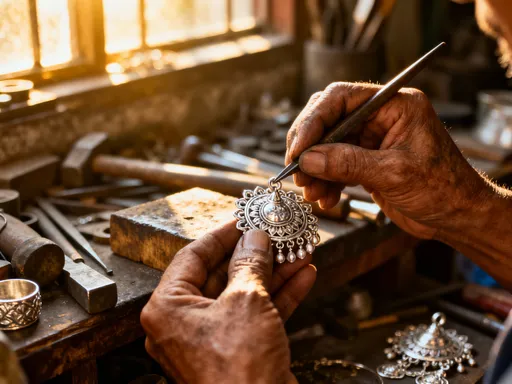
What sets Kotagede silver apart is its attention to detail and integration of Javanese aesthetics. Designs often feature floral patterns, wayang-inspired figures, or geometric motifs inspired by temple carvings. Unlike industrial jewelry, each piece is shaped by hand—sawed, filed, soldered, and polished without molds or mass production. The process for a single ring can take days, especially if it includes filigree or stone inlay. Artisans work under natural light in open-air studios, often seated on low stools with tools laid out on wooden tables. Visitors are usually welcome to observe, and many workshops encourage questions, offering a rare window into the artisan’s world.
One of the most respected studios is Ageng Silver, a multi-generational business known for its craftsmanship and ethical practices. Another notable name is Djamuran, which blends traditional techniques with contemporary designs, appealing to younger buyers while maintaining quality. These studios often employ local apprentices, ensuring the skills are passed on. By choosing to buy from such places, travelers support sustainable livelihoods and help preserve a fragile tradition.
Shopping in Kotagede is a different experience from bargaining in crowded markets. Most reputable studios list fixed prices, especially for higher-end pieces, reflecting the labor and silver content. However, in smaller stalls or family shops, polite negotiation is acceptable. It’s wise to ask about the silver purity—most authentic pieces are marked 925, indicating sterling silver. Be cautious of unusually low prices, which may signal plated metal or imported goods.
For women who appreciate timeless elegance, Kotagede offers more than jewelry. Many artisans create decorative boxes, incense holders, and wall art that bring a touch of Javanese refinement to any home. A small silver *kendi* (water pitcher), for instance, serves as both a functional item and a sculptural piece. These objects carry quiet beauty—understated yet full of meaning. Bringing one home isn’t just about decoration; it’s about honoring a craft that values slowness, skill, and soul.
Wayang Kulit: Bringing Shadows to Life
Among the most profound cultural treasures of Yogyakarta is *wayang kulit*, the traditional leather shadow puppet. Also recognized by UNESCO, this art form is central to Javanese storytelling, philosophy, and spirituality. *Wayang* performances typically unfold at night, with a puppeteer—called a *dalang*—manipulating intricately carved puppets behind a backlit cotton screen. Accompanied by a live gamelan orchestra, the stories draw from ancient epics like the Ramayana and Mahabharata, blending myth, humor, and moral lessons.
The puppets themselves are masterpieces. Crafted from water buffalo hide, they are first sketched, then painstakingly carved with fine chisels. After carving, they are smoothed, painted with natural dyes, and fitted with movable arms made from buffalo horn. The level of detail is extraordinary—each character has a distinct profile, costume, and expression. Noble figures like Prince Rama have refined, symmetrical features, while demons like Rahwana have exaggerated, angular faces. The most beloved character, Semar, is a clown-servant with a potbelly and wise eyes, representing the common people and divine wisdom.
Creating a single puppet can take up to a week. The process demands not only technical skill but deep knowledge of the stories and symbolism. Every curve of a crown, every pattern on a robe, carries meaning. For example, a straight nose indicates nobility, while a curved one suggests villainy. The craftsmanship is so precise that the shadows cast on the screen are instantly recognizable, even to young children.
Travelers can purchase *wayang* puppets as decorative art, though they should be mindful of their cultural weight. Reputable places to buy include the Yogyakarta Wayang Museum near the Kraton, or workshops in Pakualaman and Giwangan. Some artisans, like those at Sanggar Wayang Nini Thresni, offer demonstrations and allow visitors to try handling the puppets. These experiences deepen appreciation and ensure that buyers understand what they’re acquiring.
When selecting a puppet, consider size, material, and craftsmanship. Smaller pieces (about 25–30 cm) are easier to transport and make striking wall displays. Larger ones, while impressive, require careful packing. Since the puppets are made of leather, travelers should check their home country’s customs regulations regarding animal products. It’s also wise to avoid cheap imitations sold in tourist kiosks—these often lack detail and are mass-produced in factories outside Jogja.
For families, *wayang* can be a meaningful educational gift. It introduces children to Indonesian culture, storytelling, and moral reasoning. Some parents even use small puppets for bedtime tales. More than decoration, a *wayang* puppet is a bridge between generations—a reminder that wisdom can come in many forms, even shadows on a screen.
Handmade Pottery from Kasongan: Earth, Fire, and Soul
Just south of Yogyakarta lies Kasongan Village, a hidden gem for lovers of handmade ceramics. For over 250 years, this community has specialized in terracotta and clay pottery, using techniques that have changed little over time. Unlike factory-made ceramics, Kasongan’s pieces bear the marks of human touch—the slight asymmetry of a hand-shaped vase, the smoky gradients from wood-fired kilns, the earthy reds and browns of natural clay. The result is pottery that feels alive, grounded in the soil of Java.
The process begins with digging local clay, which is then cleaned, kneaded, and left to rest. Artisans shape the pieces on foot-powered wheels or by hand, using simple tools. Once formed, the items dry in the sun before being fired in traditional kilns fueled by rice husks or wood. This low-tech method produces unpredictable results—some glazes crackle, others darken in spots—but these “imperfections” are celebrated as part of the charm. After firing, many pieces are painted with natural pigments or left in their raw, rustic state.
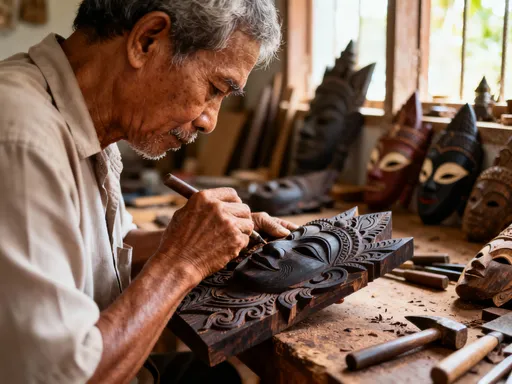
Kasongan is known for a wide range of products: vases, planters, cooking pots, ceremonial masks, and decorative animals like elephants and birds. One of the most distinctive items is the *topeng* (mask), often used in traditional dances. These masks are not just decorative; they are believed to carry spiritual energy, representing ancestors or deities. While most sold to tourists are for display, they still reflect deep cultural roots.
Visitors are welcome in many workshops, where families often work together—grandparents preparing clay, parents shaping pots, children painting details. This intergenerational collaboration is key to preserving the craft. Some studios, like Galeri Kasongan and Toko Kerajinan Tangan, offer hands-on experiences, letting guests try wheel-throwing or painting. These activities are especially enjoyable for women traveling with family or friends, creating shared memories beyond shopping.
Supporting Kasongan artisans means contributing to a sustainable, community-based economy. Unlike large-scale manufacturers, these potters rely on tourism for income. Buying directly ensures fair pay and encourages the continuation of traditional methods. It’s also environmentally mindful—clay is abundant, and firing uses renewable biomass. For home decorators, Kasongan pottery adds warmth and authenticity. A hand-thrown mug or a terracotta lamp brings a sense of calm, a quiet rebellion against mass-produced decor.
Practical Tips for Smart & Respectful Shopping
Shopping in Yogyakarta can be deeply rewarding, but it requires awareness and respect. Understanding local customs ensures a positive experience for both traveler and artisan. One of the most important aspects is bargaining etiquette. In large markets like Pasar Beringharjo or Malioboro Street, polite negotiation is expected. Start by asking the price, then offer 50–60% of that amount. Stay friendly, smile, and be prepared to walk away—vendors often call you back with a better offer. However, in cooperatives, fair-trade shops, or family studios, prices are often fixed. These places already operate on thin margins, and haggling can undermine their sustainability. When in doubt, ask, “Is this price fixed?”
Packing fragile items requires care. Wrap ceramics in soft cloth or bubble wrap, then place them in the center of your suitcase, surrounded by clothing for cushioning. For batik, roll the fabric rather than fold it to prevent creases. Silver jewelry should be stored in separate pouches to avoid scratches. If buying large or delicate pieces like *wayang* puppets, consider shipping them home through a reputable courier service—many workshops offer this option.
Customs regulations are another consideration. While most textiles and ceramics face no restrictions, items made from animal products—such as *wayang* leather or bone carvings—may be subject to inspection. Check your country’s import rules before purchasing. Avoid anything labeled as an “antique” unless it comes with proper documentation. Many so-called antiques are modern reproductions, and buying them can unintentionally support illegal trade.
Most importantly, practice mindful consumption. Yogyakarta’s crafts are not disposable. Choose pieces that resonate with you—something you’ll cherish, use, or pass down. A single, well-chosen batik scarf or silver bracelet has more value than ten impulse buys. By buying less and choosing wisely, you honor the artisans’ effort and contribute to cultural preservation.
Why These Crafts Matter Beyond Souvenirs
The crafts of Yogyakarta are not just beautiful objects—they are lifelines. In a world where globalization threatens local traditions, these handmade treasures represent resistance, resilience, and pride. Every purchase from a batik maker, silversmith, or potter does more than bring joy to a traveler; it sustains a family, funds a child’s education, and keeps ancient skills alive. Tourism, when done thoughtfully, becomes a force for good.
These crafts also preserve intangible heritage—the stories, philosophies, and values embedded in each design. A *parang* motif isn’t just a pattern; it’s a reminder of strength and continuity. A *wayang* puppet isn’t just a toy; it’s a vessel of moral wisdom. When we carry these items home, we become storytellers, sharing Javanese culture with our communities. We shift from being passive tourists to active participants in cultural exchange.
For women who seek meaningful experiences, Yogyakarta offers a rare depth. It’s a place where you can slow down, listen, and connect. Where a simple piece of cloth or metal carries generations of meaning. The city doesn’t dazzle with luxury; it reveals itself quietly, through the tap of a hammer, the scent of hot wax, the warmth of a potter’s hands.
So when you travel to Yogyakarta, go beyond the checklist. Step into a workshop. Ask questions. Learn a name. Buy with intention. Carry home not just souvenirs, but stories—stories of skill, of pride, of a culture that refuses to be forgotten. In doing so, you don’t just remember your trip. You help ensure that Yogyakarta’s soul continues to beat, strong and steady, for generations to come.